 EN
EN
 cn
cn -d7.webp "EFCX Waterproof, Dustproof, and Corrosion-Resistant Pin Connector (Engineering Plastic) - Socket with Switch and Mechanical Interlock")
-d2.webp "EFA Waterproof, Dustproof, and Corrosion-Resistant Control Button (Aluminum Alloy)")
The Safety Interlock: Why Plug-and-Play Is Dangerous in Hazardous Areas — Choosing the Right Ex Proof Socket
Jun 12,2026


-series-explosion-proof-power-distribution-panels.webp "SEM(D) Series Explosion-Proof Power Distribution Panels")
-x.webp "EFC Waterproof, Dustproof, and Corrosion-Resistant Control Station (Aluminum Alloy)")
-waterproof,-dustproof,-and-corrosion-resistant-lighting-(power)-distribution-box-(aluminum-alloy)-x.webp "EFM(D) Waterproof, Dustproof, and Corrosion-Resistant Lighting (Power) Distribution Box (Aluminum Alloy)")
-x.webp "EFDZ Waterproof, Dustproof, and Corrosion-Resistant Circuit Breaker (Stainless Steel/Carbon Steel)")
-x.webp "EFCX-n Waterproof, Dustproof, and Corrosion-Resistant Pin Connector (Aluminum Alloy)")
-x.webp "EFJX Waterproof, Dustproof, and Corrosion-Resistant Junction Box (Aluminum Alloy)")
-x.webp "Waterproof, Dustproof and Anti-Corrosion Electrical Box (Economy Type)")
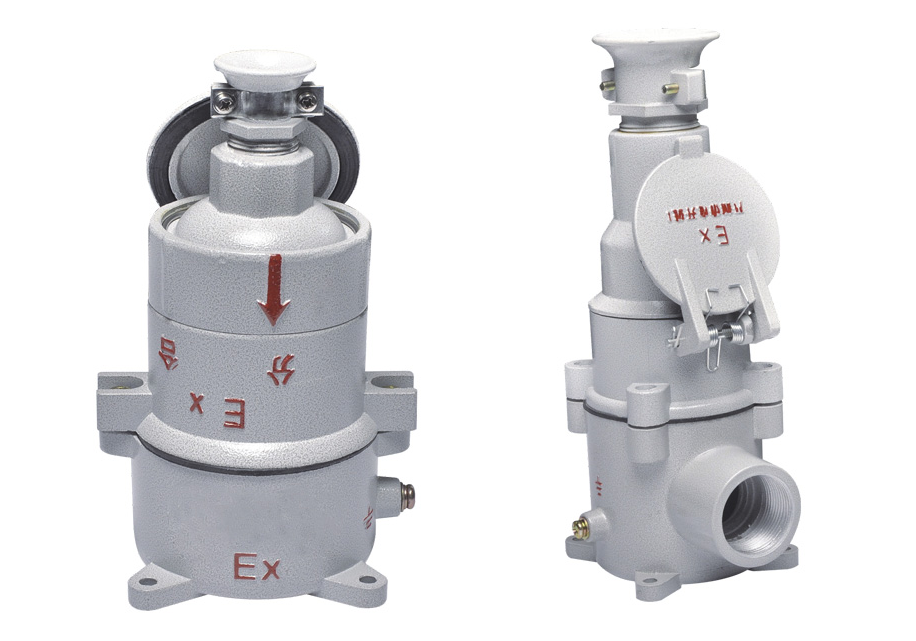
When hazardous-area electrical safety comes up in procurement conversations, gas and vapor hazards dominate the discussion. Flammable atmospheres from hydrocarbons, solvents, and process gases are well-understood, well-regulated, and well-specified in most industrial facilities. What receives significantly less systematic attention—and what is generating an increasing share of audit findings and incident reports in 2026—is combustible dust. In pharmaceutical powder handling and grain and food processing facilities, the explosion proof socket is not a secondary consideration to gas-rated equipment: it is a primary safety component in environments where flour, sugar dust, starch, and active pharmaceutical ingredient (API) powders can form ignitable dust clouds or accumulate as ignitable layers on equipment surfaces.
The electrical ignition risk in dust environments is different from gas environments in ways that directly affect socket specification. Fine combustible dust does not just create an explosive atmosphere—it infiltrates electrical enclosures, accumulates on contact surfaces, degrades insulation, creates conductive paths, and generates hot spots through resistive heating. An explosion proof switch socket outlet selected for a dust-risk area must address two distinct protection requirements simultaneously: controlling the switching and connection sequence to prevent arcing during plug insertion and removal, and maintaining dust-tight sealing to prevent fine powder from reaching live parts inside the enclosure. Neither protection alone is sufficient. Both must be specified, verified, and maintained together.
In 2026, dust risk management is under tighter regulatory scrutiny than at any point in the previous decade. Facilities that have historically treated dust hazards as secondary to gas hazards are finding that audit standards have caught up with the science. The procurement teams and facility engineers who get ahead of this shift—by specifying the right explosion proof socket for their dust environment now—are the ones who will pass audits, avoid incidents, and reduce the total cost of electrical maintenance in powder-handling areas.
The dust hazard in pharmaceutical and grain processing facilities is not a single, static condition. It is a dynamic environment that changes with production activity, equipment state, and housekeeping cycles. Understanding the specific dust scenarios in these facilities is the starting point for correct socket specification.
In grain processing and food powder facilities, the primary dust generation points include bag dumping stations, pneumatic conveying lines, milling and grinding operations, mixing and blending equipment, sifting and screening stations, and packaging lines. Each of these operations generates airborne dust clouds during active operation and leaves dust layer accumulation on surrounding equipment surfaces during and after operation. The combination of intermittent dust clouds and persistent dust layers creates a hazard that is present in different forms at different times—and that must be managed by electrical equipment that performs safely under both conditions.
In pharmaceutical powder operations, the dust scenarios are similar in structure but often involve finer particle sizes and lower minimum ignition energies. API powders, excipient dusts, and granulation intermediates can have minimum ignition energies in the millijoule range—comparable to or lower than many flammable gases. Dispensing and weighing rooms, granulation suites, blending operations, tablet coating preparation areas, and packaging lines all present dust exposure conditions that require the same systematic electrical hazard management as gas-classified areas.
Three distinct electrical ignition pathways are relevant in combustible dust environments, and a properly specified explosion proof socket must address all three:
Dust ingress into contacts and enclosures: Fine combustible dust that enters an electrical enclosure can accumulate on contact surfaces, degrade insulation resistance, create conductive paths between live parts, and generate resistive heating as current flows through contaminated contact interfaces. Over time, this accumulation can cause tracking, overheating, and shorting—all of which are potential ignition sources for the dust itself.
Arcing during plug insertion and removal under load: The same arcing risk that applies in gas environments applies in dust environments. A live unplug event generates an arc at the plug-contact interface. In a dust cloud or near a dust layer, that arc is a potential ignition source. The interlock mechanism that prevents live unplugging is as relevant in dust environments as in gas environments.
Hot surfaces from overloaded connections or poor contact pressure: Dust accumulation on contact surfaces increases contact resistance, which increases resistive heating at the connection point. If the surface temperature of the socket enclosure or contacts exceeds the ignition temperature of the dust layer in contact with it, ignition can occur without any arcing event. Temperature class specification and contact condition maintenance are both relevant to this pathway.
The protection architecture of an explosion proof switch socket outlet in a dust environment consists of two layers that must work together. Neither layer alone provides adequate protection; both must be present and functional.
Layer 1 — Controlled switching sequence (interlock): The mechanical interlock enforces the safe connection and disconnection sequence: the plug cannot be withdrawn while the circuit is energized, and the circuit cannot be energized until the plug is fully inserted and correctly seated. This eliminates uncontrolled arcing at the plug-contact interface during user-initiated connection and disconnection events. In dust environments, where the presence of an ignitable atmosphere is intermittent and not always visible, eliminating the arcing event entirely is more reliable than attempting to time connection events to coincide with dust-free conditions.
Layer 2 — Sealing and dust exclusion: The enclosure sealing system—gaskets at the cover interface, certified cable glands at cable entries, and sealed contact chambers—prevents fine dust from entering the enclosure and reaching live parts. In dust environments, the relevant sealing standard is IP6X (dust-tight), which specifies that no dust ingress occurs under test conditions. This is the sealing level required to protect against fine combustible powders such as flour, sugar dust, starch, and API powders, which have particle sizes small enough to penetrate any gap that is not specifically designed and tested to exclude them.
The conceptual shift required for dust environment specification is from "explosion-proof enclosure" thinking—which focuses on containing an internal ignition event—to "dust-ignition-proof" thinking, which focuses on preventing dust from reaching ignition-capable conditions inside the enclosure in the first place. In a dust environment, the goal is not just to contain an arc if one occurs; it is to prevent dust from accumulating in energized cavities where it could create conductive paths, hot spots, or fuel for an internal ignition event.
This distinction has direct procurement implications. A socket that is certified for gas environments under a flameproof (Ex d) protection concept may not provide adequate dust exclusion if its sealing design does not achieve IP6X. Conversely, a socket with excellent IP sealing but no interlock mechanism does not address the arcing risk during connection events. The correct specification for dust environments requires both protection layers to be present and verified.
The following table summarizes the key specification parameters for explosion proof socket selection in pharmaceutical and grain processing dust environments:
| Specification Parameter | Requirement for Dust Environments | Notes |
|---|---|---|
| Dust ingress protection | IP6X (dust-tight) — no dust ingress | Critical for fine powders; IP5X (dust-protected) is insufficient for API and flour-scale particles |
| Water ingress protection | IPX5 or IPX6 depending on washdown exposure | Food and pharma facilities often require high-pressure washdown compatibility |
| Combined IP rating | IP65 or IP66 as typical targets | IP65: dust-tight + water jet; IP66: dust-tight + powerful water jet |
| Interlock mechanism | Mechanical interlock enforcing OFF-before-unplug and ON-only-after-full-insert | Same requirement as gas environments; equally critical in dust |
| Temperature class | Must be below ignition temperature of the specific dust present | Dust ignition temperatures vary significantly; confirm against site dust characterization |
| Area classification | Zone 21/22 (IEC) or Division 2 Class II (NEC) as applicable | Confirm with site hazard assessment; do not assume gas-area classification applies |
| Enclosure material | Stainless steel or coated aluminum for food/pharma washdown environments | Standard aluminum may not be compatible with cleaning agents used in food/pharma |
| Gasket material | Aging-resistant elastomer; compatible with cleaning chemicals | Gasket degradation is the most common cause of IP sealing failure over time |
| Cable entry | Certified dust-tight glands; thread type compatible with site standard | Gland selection is as important as enclosure IP rating for overall sealing performance |
| Rated voltage / frequency / current | Match site supply and connected equipment; apply derating for ambient temperature | Overloaded connections increase contact temperature and dust ignition risk |
| LOTO provisions | Padlock hasp or equivalent | Required for lockout/tagout compliance in maintenance scenarios |
| Vibration resistance | Confirm for installations near conveyors, mills, or compactors | Vibration can loosen fasteners and compromise gasket compression over time |
The IP rating system provides a two-digit code where the first digit describes protection against solid particle ingress and the second describes protection against water ingress. For combustible dust environments, the first digit is the critical parameter.
IP6X specifies dust-tight protection: no dust ingress under test conditions. This is the minimum requirement for fine combustible powders. IP5X (dust-protected) permits limited dust ingress and is not appropriate for environments where fine API powders, flour, or sugar dust are present.
IPX5 specifies protection against water jets from any direction; IPX6 specifies protection against powerful water jets. In food processing and pharmaceutical facilities where high-pressure washdown is part of the cleaning protocol, IPX6 is typically the appropriate water ingress specification.
The combined ratings IP65 (dust-tight + water jet) and IP66 (dust-tight + powerful water jet) represent the typical target specifications for explosion proof sockets in pharma and grain processing environments. The choice between IP65 and IP66 should be based on the actual washdown pressure and flow rate used at the installation point.
| Application Point | Dust Hazard Condition | Key Specification Priority |
|---|---|---|
| Bag dumping stations | Intermittent high-concentration dust clouds during bag opening | IP66 + interlock + dust group temperature class |
| Pneumatic conveying lines | Continuous dust suspension in transfer zones | IP66 + vibration resistance near conveyor equipment |
| Milling and grinding areas | Fine particle generation; persistent dust layers | IP66 + temperature class for fine flour/starch |
| Silo loading/unloading | Dust cloud generation during transfer; outdoor exposure | IP66 + UV-resistant enclosure + corrosion resistance |
| Packaging lines | Intermittent dust from product handling; washdown between runs | IP66 + stainless or coated enclosure for washdown compatibility |
| Dust collection zones | Concentrated dust accumulation; maintenance power for service work | IP66 + interlock + LOTO provisions |
| Application Point | Dust Hazard Condition | Key Specification Priority |
|---|---|---|
| Dispensing and weighing rooms | Fine API powder; low minimum ignition energy | IP66 + temperature class verified against API dust data |
| Granulation suites | Wet and dry granulation dust; cleaning chemical exposure | IP66 + chemical-resistant gasket + stainless enclosure |
| Blending operations | Powder cloud generation during charging and discharging | IP66 + interlock for maintenance power connections |
| Tablet coating preparation | Solvent and powder combination; dual gas/dust hazard possible | Confirm whether combined gas/dust classification applies |
| Packaging lines | Product dust; high-frequency washdown | IP66 + stainless enclosure + high-pressure washdown rating |
For procurement teams and facility engineers, the operational outcomes that define a successful explosion proof socket specification in dust environments are:
Fewer dust-related electrical failures: no dust ingress into contact chambers, no tracking or overheating from contaminated contacts, no insulation degradation from accumulated powder
Lower risk of ignition events during connection and disconnection: interlock mechanism functioning correctly, no live unplug events at maintenance power points
Cleaner audit trail: clear selection rationale tied to dust type, area classification, IP rating, and temperature class—documented and verifiable at inspection
Reduced maintenance callout frequency: IP sealing maintained over time through correct gasket specification and replacement intervals
Step 1: Define the dust hazard Identify the dust type (grain, flour, sugar, starch, API, or other), the dust's minimum ignition energy and ignition temperature (from site dust characterization data or material safety data), and the area classification basis used at the facility (IEC Zone 21/22 or NEC Class II Division 1/2). This step must be completed before any other specification parameter is evaluated.
Step 2: Confirm required protection concept and certification scheme Identify the protection concept required by the site standard (dust-ignition-proof, increased safety, or other) and the certification scheme in use at the facility (ATEX, IECEx, NEC, or regional equivalent). Confirm that the product's certification marking matches the site requirement.
Step 3: Select IP target Based on dust particle size and washdown exposure, specify IP65 or IP66 as the minimum combined IP rating. For fine API powders or high-pressure washdown environments, IP66 is the appropriate target. Confirm that the IP rating applies to the complete assembled unit including cable glands, not just the enclosure body.
Step 4: Confirm interlock type and function Specify that the interlock must enforce both protections: no withdrawal under load, and no energizing before full insertion. Request confirmation of the interlock mechanism type and include a functional test in the acceptance criteria.
Step 5: Confirm cable entry and glands Specify certified dust-tight cable glands compatible with the site cable management standard and thread type. The gland selection is as important as the enclosure IP rating for overall sealing performance—a correctly rated enclosure with an incorrectly specified gland will not achieve the stated IP protection.
Step 6: Standardize plug and socket families Specify pin configuration and keying to prevent mis-mating with incompatible equipment or voltage levels. Standardizing on a single plug and socket family across a production line or facility reduces connection errors, simplifies spares management, and reduces the training burden for maintenance personnel.
Before installing any explosion proof socket in a dust-risk area, perform the following acceptance checks:
Verify that the certification marking matches the site hazard requirement: protection concept, dust group, temperature class, and certification body
Inspect gasket condition and cover sealing: no damage, correct compression, no gaps at the cover interface
Verify cable gland specification and installation: correct thread engagement, correct torque, correct seal element for cable diameter
Perform mechanical interlock function test: confirm that the plug cannot be withdrawn with the switch in the ON position, and that the switch cannot be moved to ON with the plug partially inserted
Confirm that installation torque specifications for fasteners and glands are documented and followed
IP sealing performance is not a fixed property of an enclosure—it degrades over time if not actively maintained. In dust environments, where the consequences of sealing failure include both electrical failure and ignition risk, a structured preventive maintenance program for explosion proof sockets is a safety requirement, not just a reliability practice.
| Maintenance Item | Inspection Criteria | Action on Failure |
|---|---|---|
| Cover gasket condition | No hardening, cracking, compression set, or chemical degradation; correct seating in groove | Replace gasket; do not operate until replaced |
| Cable gland tightness | Correct torque; no cable movement; seal element in contact with cable jacket | Re-torque or replace gland; verify cable diameter compatibility |
| Contact condition | No discoloration, pitting, or deposits indicating overheating or dust contamination | Clean contacts; investigate root cause; replace if pitting is significant |
| Interlock mechanism | Smooth engagement and release; no bypass play or mechanical wear | Service or replace interlock mechanism; do not operate if interlock can be bypassed |
| Enclosure fasteners | No corrosion, loosening, or missing fasteners; correct torque | Replace corroded fasteners; re-torque to specification |
| Cleaning protocol alignment | Cleaning agents and methods compatible with gasket material and enclosure coating | Update cleaning protocol if incompatibility is identified |
The total cost of ownership argument for correctly specified explosion proof sockets in dust environments is built on four cost reduction levers:
Reduced line stop frequency: A single electrical failure at a maintenance power point in a production area can stop a line while the fault is investigated and repaired. In pharmaceutical and food processing facilities, where line stops have direct product quality and batch integrity implications, the cost of one unplanned stop typically exceeds the cost of the correct socket specification by a significant margin.
Reduced incident exposure: A dust ignition event caused by an electrical ignition source at a socket connection point carries investigation costs, regulatory reporting obligations, potential production shutdown, and liability exposure. The cost of avoiding one such event is not quantifiable in advance, but it is orders of magnitude larger than the cost of correct specification.
Lower repeat maintenance callout rate: Sockets with inadequate IP sealing generate repeat maintenance callouts as dust ingress causes progressive electrical degradation. Each callout has a direct labor cost and an indirect production disruption cost. Correct IP specification and gasket maintenance eliminate this recurring cost category.
Simplified spares management: Standardizing on a single explosion proof socket family across a production line or facility reduces the number of spare part SKUs required, simplifies ordering, and reduces the risk of installing an incorrect replacement unit in a classified area.
Combustible dust in pharmaceutical and grain processing facilities is not a secondary hazard—it is a primary ignition risk that requires the same systematic electrical specification discipline as gas and vapor environments. Fine powders such as flour, sugar dust, starch, and API powders can infiltrate electrical enclosures, degrade contact surfaces, create conductive paths, and form ignitable layers on equipment surfaces. The right explosion proof socket for these environments pairs an interlocked explosion proof switch socket outlet design—to control make/break events and prevent live unplugging—with robust IP6X dust-tight sealing and a temperature class verified against the specific dust present at the installation site.
The specification framework is clear: confirm the dust type and area classification first, target IP65 or IP66 as the combined sealing standard, verify the interlock mechanism as a functional requirement rather than a marketing claim, and maintain gasket and gland integrity throughout the equipment's service life. That combination of correct specification, correct installation, and seal-focused maintenance is what keeps the protection effective from commissioning through the full operational lifecycle.
Start here: Visit the explosion-proof plugs and sockets product page to review available certifications, IP ratings, enclosure materials, and configuration options for dust environments.
See it in application: View the SEXC-A/B series maintenance power socket box for a practical reference on interlocked socket design in a maintenance power distribution context.
Get a tailored recommendation: Submit the details below and receive a configuration recommendation with pricing matched to your specific dust environment and facility requirements.
| What We Need | What to Provide |
|---|---|
| Environment and hazard | Dust type (flour / sugar / starch / API / other), area classification (Zone 21/22 or Class II Div), washdown requirement, indoor/outdoor, corrosion exposure |
| Quantity | Per order or annual volume |
| Electrical specification | Voltage, frequency, current (A), load type, pin configuration |
| IP and environmental target | IP65 or IP66, enclosure material preference, cable entry thread type and gland standard |
| Target outcomes | Dust ingress prevention, uptime improvement, audit compliance, standardization across lines or sites |
| Current problems | Dust ingress failures, contact overheating, arcing during unplugging, water ingress, gasket failures, mismatched plugs |
1. What is an explosion proof socket for combustible dust areas?
An explosion proof socket for combustible dust areas is a hazardous-location rated electrical socket system designed and certified to reduce the risk of igniting a combustible dust atmosphere. It combines a certified enclosure with dust-tight sealing (typically IP6X) to prevent fine powder from reaching live parts, a temperature class rating verified against the ignition temperature of the specific dust present, and controlled connection and disconnection features—typically including a mechanical interlock—to prevent arcing during plug insertion and removal. It is not simply a ruggedized industrial socket; it is a safety device whose certification scope, dust group rating, temperature class, and IP sealing performance must all match the specific hazardous-area classification and dust type at the installation site.
2. Explosion proof socket vs. standard IP-rated industrial socket — what is the difference?
A standard IP-rated industrial socket is designed to resist dust and water ingress under the conditions defined by its IP rating. Its rating describes the enclosure's resistance to environmental contamination, not its suitability for use in explosive atmospheres. An explosion proof socket for dust environments is engineered and certified specifically to reduce ignition risk in combustible dust atmospheres. This requires not only dust-tight sealing (IP6X) but also a temperature class rating below the ignition temperature of the specific dust, a protection concept certified by an accredited body against the applicable hazardous-area standard, and controlled operating features such as the mechanical interlock. Using a standard IP-rated socket in a classified dust area, regardless of its IP rating, does not provide the safety function required and is not compliant with hazardous-area electrical installation standards.
3. What is the ROI or payback of upgrading to dust-suitable explosion proof sockets?
The payback is realized across four cost categories. Fewer dust-related electrical failures reduce unplanned line stops and the associated production and labor costs. Reduced incident exposure eliminates the investigation, regulatory, and liability costs associated with a dust ignition event at an electrical connection point. Lower repeat maintenance callout rates result from IP sealing that is correctly specified and maintained, eliminating the progressive electrical degradation caused by dust ingress. Simplified spares management from standardized socket families reduces inventory complexity and the risk of incorrect replacement installations. For facilities with high-frequency maintenance power connections in dust-risk areas, the cumulative payback from these four levers typically offsets the specification investment within the first production year.
4. Do we need to retrofit or modify the site to install explosion proof sockets in dust areas?
In most cases, some site-level alignment is required, but a full retrofit is not typically necessary. The primary alignment steps are: confirming that the cable entry thread type and gland specification are compatible with the existing site cable management standard; verifying that the enclosure material and gasket specification are compatible with the cleaning agents and washdown methods used at the installation point; confirming that the mating plug pin configuration and keying match the new socket specification; and verifying that bonding and grounding connections meet site requirements. If the existing installation uses a different plug family, the mating plugs on connected equipment will also need to be updated. These steps should be planned and confirmed with the site electrical authority and safety team before installation begins.
5. What parameters should we provide for correct selection?
To receive a configuration recommendation that accurately reflects your dust environment and facility requirements, provide the following: dust type and minimum ignition energy or ignition temperature data if available; area classification (Zone 21/22 or Class II Division 1/2) and the certification scheme in use at the facility; rated voltage, frequency, and current; load type (resistive, inductive, motor); IP rating target (IP65 or IP66) and washdown pressure if applicable; enclosure material preference and cleaning chemical exposure; cable entry thread type and gland standard; pin configuration and keying requirement; mounting method and any space constraints; LOTO requirement; quantity; and a description of current failure modes—such as dust ingress into contacts, contact overheating, arcing during unplugging, water ingress, gasket failures, or mismatched plug connections.
NEXT : No information

E-mail:
zou@shengyiex.com

Phone:
+86-13817799891

Add:
No.8 Bailian Road, Nanmingshan Street, Liandu District, Lishui City, Jiangsu Province