 EN
EN
 cn
cn 
-d1.webp "EFA Waterproof, Dustproof, and Corrosion-Resistant Control Button (Stainless Steel/Carbon Steel)")

Flameproof Junction Box: The Silent Guardian of Industrial Safety
Oct 12,2025


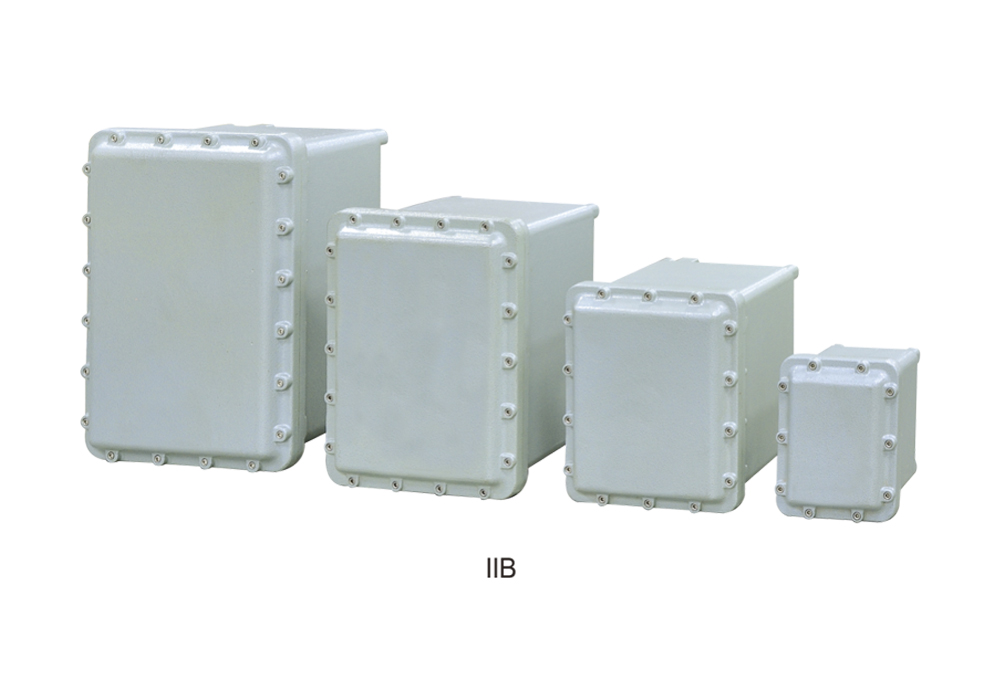
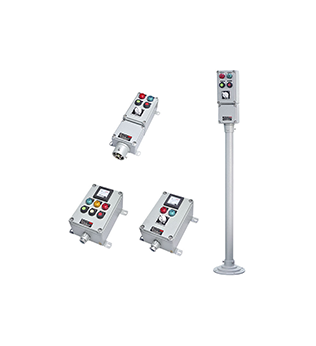
-series-explosion-proof-power-distribution-panels.webp "SEM(D) Series Explosion-Proof Power Distribution Panels")
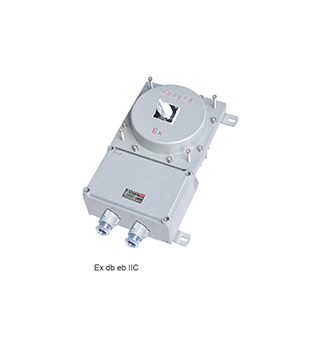
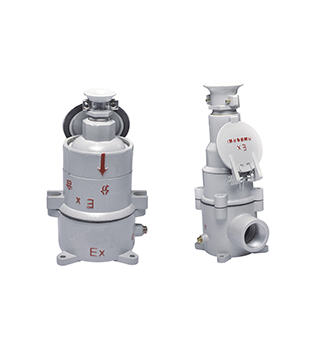
-x.webp "EFC Waterproof, Dustproof, and Corrosion-Resistant Control Station (Aluminum Alloy)")
-waterproof,-dustproof,-and-corrosion-resistant-lighting-(power)-distribution-box-(aluminum-alloy)-x.webp "EFM(D) Waterproof, Dustproof, and Corrosion-Resistant Lighting (Power) Distribution Box (Aluminum Alloy)")
-x.webp "EFDZ Waterproof, Dustproof, and Corrosion-Resistant Circuit Breaker (Stainless Steel/Carbon Steel)")
-x.webp "EFCX-n Waterproof, Dustproof, and Corrosion-Resistant Pin Connector (Aluminum Alloy)")
-x.webp "EFJX Waterproof, Dustproof, and Corrosion-Resistant Junction Box (Aluminum Alloy)")
-x.webp "Waterproof, Dustproof and Anti-Corrosion Electrical Box (Economy Type)")
In 2026, hazardous-area facilities are operating under tighter safety audit cycles, stricter compliance expectations, and increasing uptime pressure—yet a disproportionate number of electrical incidents still trace back to what looks like a routine power connection. The ex proof socket is one of the most frequently misunderstood components in hazardous-area electrical systems: it is not simply a ruggedized version of a standard industrial socket, and it is not made safe by enclosure thickness alone. The real safety function of a properly designed explosion proof switch socket outlet lies inside the enclosure—in the mechanical interlock mechanism that controls the sequence of connection and disconnection, and that prevents the single most common ignition pathway in flammable gas and vapor environments: arcing at the moment of make or break.
The field risk is specific and well-documented. When an operator plugs in or unplugs a connector under load—whether out of habit, time pressure, or simple unawareness—the breaking of a live circuit at the plug interface generates an arc. In a Zone 1 or Zone 2 environment, or in a Division 1 or Division 2 area, that arc is a potential ignition source for any flammable atmosphere present at that moment. The probability of coincidence between a live unplug event and a flammable concentration is not zero—and in high-traffic maintenance power points, the frequency of connection and disconnection events is high enough to make that probability operationally significant.
A "plug-and-play" approach to hazardous-area power connections treats the socket as a passive component and relies entirely on operator behavior to prevent unsafe sequences. That reliance is the vulnerability. A properly specified ex proof socket with a true mechanical interlock removes the behavioral variable from the equation: the interlock physically enforces the safe sequence every time, regardless of operator habits, time pressure, or training gaps.
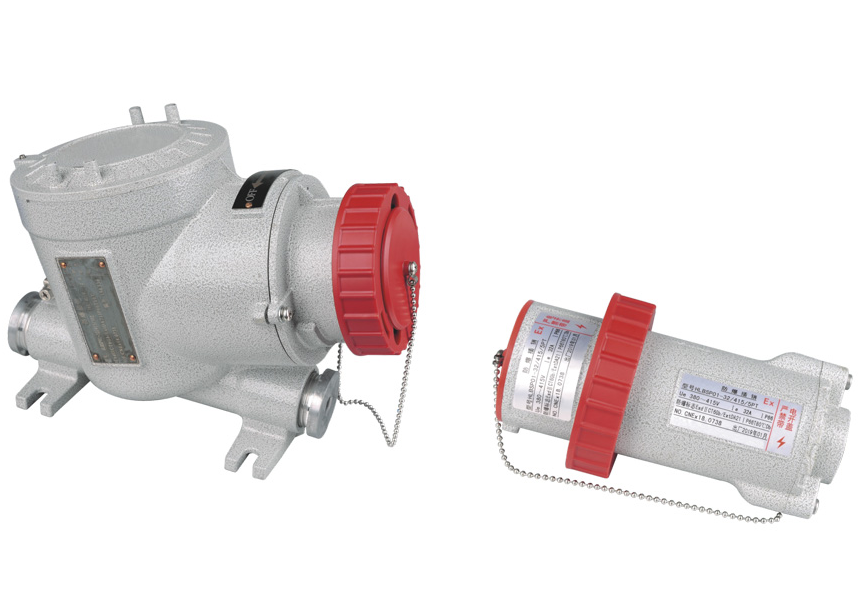
The ignition risk in hazardous-area electrical connections is not primarily about the steady-state operation of the connected equipment. It is about the transient event at the moment of connection or disconnection. When a live circuit is broken at the plug interface—rather than at a designed switching mechanism—the energy stored in the circuit is released as an arc across the separating contacts. The arc temperature, duration, and energy are functions of the circuit parameters, but even relatively low-energy arcs can exceed the minimum ignition energy of common flammable gases and vapors.
In a standard industrial environment, this arc is an inconvenience and a contact wear mechanism. In a hazardous area, it is a potential ignition source. The distinction is not about the arc itself—it is about the environment in which it occurs.
The "plug-and-play" behavior pattern—connecting and disconnecting equipment without first switching off the circuit—is deeply ingrained in general industrial practice. Operators who work across both standard and hazardous areas carry that habit with them. Training can reduce the frequency of unsafe behavior, but it cannot eliminate it. The interlock mechanism is what makes the safe sequence the only possible sequence.
The most common specification error in hazardous-area socket procurement is treating the enclosure certification as the primary safety feature and the interlock as an optional enhancement. This misreads the safety architecture. The certified enclosure—whether flameproof (Ex d), increased safety (Ex e), or another protection concept—is designed to contain or prevent ignition under defined conditions. But it does not prevent the arc from occurring at the plug interface during a live unplug event. The interlock is what prevents that event from happening in the first place.
A thick, certified enclosure on a socket without a functional interlock is a component that looks compliant but does not address the primary behavioral ignition pathway. Procurement teams specifying ex proof sockets for high-traffic maintenance power applications should treat the interlock mechanism as a mandatory functional requirement, not a premium feature.
The interlock mechanism in a properly designed explosion proof switch socket outlet enforces two distinct protections, one in each direction of the connection sequence:
Protection 1 — No withdrawal under load: When the circuit is energized and the switch is in the ON position, the interlock physically prevents the plug from being withdrawn from the socket. The mechanical linkage between the switch mechanism and the plug retention system means that the plug cannot be released until the switch has been moved to the OFF position and the circuit has been de-energized. The operator cannot bypass this sequence through force or habit—the plug is mechanically retained until the safe condition is established.
Protection 2 — No energizing before full insertion: When a plug is being inserted, the interlock prevents the switch from being moved to the ON position until the plug is fully seated and correctly engaged in the socket. Partial insertion—where the plug contacts may be partially engaged but not fully mated—is a condition where energizing the circuit could produce arcing at the contact interface. The interlock eliminates this risk by making full insertion a physical prerequisite for switching.
Together, these two protections define the safe operating sequence: insert fully → lock → switch ON; and in reverse: switch OFF → unlock → withdraw. The interlock enforces this sequence mechanically, making deviation physically impossible rather than merely procedurally discouraged.
The ignition prevention logic follows directly from the sequence control. By ensuring that the switching action—the make or break of the circuit—occurs at the designed switching mechanism rather than at the plug-socket contact interface, the interlock confines any arc energy to a controlled environment. The switching mechanism in a certified explosion proof switch socket outlet is designed and tested to handle the make/break arc safely within its protection concept. The plug-socket contact interface is not designed for this function and is not tested for it.
The interlock does not eliminate arcing from the electrical system—switching always involves some arc energy. What it eliminates is uncontrolled arcing at an undesigned location (the plug contacts) in an uncontrolled environment (the hazardous area atmosphere at the moment of unplugging). That is the specific ignition pathway that the interlock is designed to close.
The following table summarizes the key specification parameters buyers should confirm when selecting an ex proof socket for hazardous-area maintenance power applications:
| Specification Parameter | What to Confirm | Why It Matters |
|---|---|---|
| Area classification | Zone 1/2 or Division 1/2; required protection concept (Ex d, Ex e, etc.) | Determines certification scope and marking requirements |
| Gas group | IIA / IIB / IIC (or equivalent Division grouping) | Must match the most severe gas/vapor present at the installation site |
| Temperature class | T1–T6 (or equivalent) | Must be below the auto-ignition temperature of the hazardous substance |
| Rated voltage / frequency | V, Hz | Must match site supply and connected equipment |
| Rated current | A | Must cover maximum load with appropriate derating for ambient temperature |
| Interlock type | Mechanical interlock enforcing OFF-before-unplug and ON-only-after-full-insert | Core safety function — confirm it is present and functional, not just claimed |
| Pin configuration and keying | Number of poles, earthing, keying to prevent mis-mating | Prevents connection of incompatible equipment or voltage levels |
| Ingress protection | IP rating (dust and water) | Must match environmental exposure at installation point |
| Enclosure material | Aluminum alloy, stainless steel, GRP — based on corrosion environment | Offshore, chemical, and washdown environments have specific material requirements |
| Cable entry | Thread type (Metric, NPT, PG), gland compatibility, strain relief | Must align with site cable management standard and wiring method |
| LOTO provisions | Padlock hasp or equivalent | Required for lockout/tagout compliance in maintenance scenarios |
| Auxiliary contacts | Status monitoring output | Optional but valuable for remote indication of socket state in automated systems |
The single most consequential specification decision is confirming the correct area classification and required protection concept for the installation site before any other parameter is evaluated. An ex proof socket specified for Zone 2 is not appropriate for Zone 1 installation. A product certified for gas group IIA is not appropriate for a site where IIC gases (hydrogen, acetylene) are present. These are not conservative margin decisions—they are the boundary conditions of the certification.
Buyers should obtain the site hazard assessment or area classification drawing before issuing an RFQ, and confirm that the product's certification marking matches the site requirement exactly. A product that "looks right" but carries the wrong certification is a compliance liability and a safety risk.
| Application Context | Primary Risk Addressed | Key Specification Priority |
|---|---|---|
| Maintenance power distribution in Zone/Div areas | Live unplugging of portable tools, pumps, lighting under load | Interlock function + correct area classification |
| Shutdown and turnaround work | Elevated human factors risk; high connection/disconnection frequency | Interlock + LOTO provisions + keying |
| Loading and unloading areas | Flammable vapor release during transfer operations | Gas group and temperature class alignment |
| Paint and coating lines | Solvent vapor environments; frequent equipment repositioning | Enclosure material + IP rating + interlock |
| Chemical processing units | Continuous hazardous atmosphere; corrosive environment | Corrosion-resistant enclosure + IIC/IIB certification |
| Offshore and marine installations | Saltwater corrosion + Zone 1 classification | Stainless steel or GRP enclosure + marine certification |
| Skid-mounted equipment connections | Standardized power interface for modular equipment | Pin keying + standardized plug family |
An interlocked ex proof socket is not a standalone safety solution—it is one layer in a defense-in-depth safety architecture. It complements permit-to-work systems by physically enforcing the safe connection sequence even when permit discipline is imperfect. It complements LOTO procedures by providing a padlockable isolation point at the power connection. It complements operator training by making the unsafe sequence physically impossible rather than merely prohibited.
In high-traffic maintenance power points—where the same socket may be connected and disconnected dozens of times per week by different operators with varying training levels—the interlock is the layer that does not depend on human consistency. That is its operational value.
Step 1: Confirm area classification and certification requirement Obtain the site area classification drawing and identify the Zone/Division, gas group, and temperature class for the installation point. Confirm the required protection concept (Ex d, Ex e, or combination) and the applicable certification scheme (ATEX, IECEx, NEC, or regional equivalent). This step must be completed before any other specification parameter is evaluated.
Step 2: Confirm electrical ratings and duty Specify rated voltage, frequency, and current. Confirm whether the application is continuous duty or maintenance/intermittent duty, and apply appropriate derating for ambient temperature at the installation point.
Step 3: Confirm interlock type and function Specify that the interlock must enforce both protections: no withdrawal under load, and no energizing before full insertion. Request confirmation of the interlock mechanism type and ask for a functional demonstration or test procedure as part of the acceptance criteria.
Step 4: Confirm environmental constraints Specify IP rating for dust and water exposure. Confirm enclosure material based on corrosion environment (standard aluminum alloy, stainless steel for marine or chemical exposure, GRP for specific chemical resistance requirements). Confirm UV resistance if outdoor installation is involved.
Step 5: Standardize mating plugs and keying Specify the pin configuration and keying arrangement to prevent mis-mating with incompatible equipment or voltage levels. Standardizing on a single plug family across a site or facility significantly reduces the risk of connection errors and simplifies spares management.
Step 6: Align accessories with maintenance process Confirm cable entry thread type and gland compatibility with site cable management standards. Specify LOTO provisions if required. Confirm whether auxiliary contacts for status monitoring are needed for integration with site control or monitoring systems.
Before installing any ex proof socket in a hazardous area, perform the following acceptance checks:
Verify that the certification marking on the product matches the site hazard requirement exactly (protection concept, gas group, temperature class, certification body)
Perform a mechanical interlock function test: confirm that the plug cannot be withdrawn with the switch in the ON position, and that the switch cannot be moved to ON with the plug partially inserted
Inspect seal and gland integrity; confirm that cable entry torque procedures are documented and followed
Verify fastener integrity and check for any transit damage to enclosure or contact surfaces
| Maintenance Item | Inspection Criteria | Frequency Guidance |
|---|---|---|
| Interlock mechanism | Smooth engagement and release; no bypass play or mechanical wear that allows sequence deviation | Per site inspection schedule; increase frequency in high-use points |
| Contact condition | No signs of overheating, pitting, or discoloration indicating arc damage | At each scheduled inspection |
| Gasket and seal condition | No cracking, compression set, or deformation; replace if seal integrity is compromised | At each scheduled inspection |
| Cable gland tightness | Confirm torque and seal integrity; check for cable movement or strain | At each scheduled inspection |
| Fastener integrity | No corrosion, loosening, or missing fasteners | At each scheduled inspection |
| Enclosure corrosion | Surface condition appropriate for environment; no penetrating corrosion | Annually or per environmental exposure assessment |
The total cost of ownership argument for a properly specified, interlocked ex proof socket is straightforward when the cost categories are laid out clearly:
A socket without a functional interlock, or with a marginal interlock that degrades with use, exposes the facility to arc-related contact failures, unplanned shutdowns for socket replacement, and—in the worst case—incident investigation costs, regulatory action, and liability exposure. Each of these cost categories is individually larger than the price difference between a compliant interlocked socket and a cheaper alternative.
Standardizing on a single plug and socket family across a site or facility reduces mismatched connection errors, simplifies spares inventory, and reduces the training burden for maintenance personnel. Better sealing and enclosure quality reduces water and dust ingress failures, which are among the most common causes of repeat maintenance callouts on hazardous-area electrical equipment.
The interlock reliability is the TCO variable that matters most. A socket whose interlock mechanism wears, sticks, or can be bypassed with moderate force is not providing the safety function it was specified for—and the cost of that gap is not visible until an incident occurs.
"Plug-and-play" is dangerous in hazardous areas because it invites live make/break events at the plug-contact interface—and arcing risk is the consequence. A properly specified ex proof socket with a true mechanical interlock in the explosion proof switch socket outlet enforces the only safe operating sequence: insert fully before energizing, and de-energize before removal. That sequence control is the real safety function. The certified enclosure is the containment layer. The interlock is what prevents the ignition event from occurring in the first place.
In 2026, with tighter audit cycles and higher incident visibility, the specification of hazardous-area power connection equipment deserves the same rigor as any other safety-critical component in the facility. Working with an experienced flameproof equipment manufacturer helps ensure that the interlock mechanism, enclosure design, certification, and installation requirements are properly aligned. The interlock mechanism is not a premium option—it is the functional core of a compliant, safe, and operationally reliable ex proof socket system.
Ready to specify?
Visit the explosion-proof plugs and sockets product page to review available configurations, certifications, and options.
Need a real-world reference?
See the SEXC-A/B series maintenance power socket box here for a practical example of interlocked socket design in a maintenance power distribution application.
To receive a recommended configuration and pricing, submit the following details:
| What We Need | Details to Provide |
|---|---|
| Hazardous area and environment | Zone/Division, gas group, temperature class, corrosion exposure, washdown requirement |
| Quantity | Per order or annual volume |
| Electrical specification | Voltage, frequency, current (A), load type, pin configuration |
| Environmental and mechanical | IP rating, enclosure material, cable entry thread type, mounting method |
| Target outcomes | Arc-risk reduction, standardization goal, uptime requirement, inspection cycle |
| Current problems | Hot unplugging incidents, contact failures, corrosion, water ingress, mismatched plugs |
1. What is an ex proof socket?
An ex proof socket is a hazardous-area rated electrical socket system designed and certified to reduce the risk of igniting a flammable atmosphere during normal use. It combines a certified enclosure—designed to contain or prevent ignition under the applicable protection concept—with controlled connection and disconnection features, typically including a mechanical interlock that enforces the safe operating sequence. It is not simply a ruggedized industrial socket; it is a safety device whose certification scope, protection concept, gas group rating, and temperature class must all match the specific hazardous-area classification of the installation site.
2. Ex proof socket vs. "industrial IP-rated socket" — what is the difference?
An IP-rated industrial socket is designed to resist dust and water ingress. Its rating describes the enclosure's resistance to environmental contamination, not its suitability for use in explosive atmospheres. An ex proof socket is engineered and certified specifically to reduce ignition risk in flammable gas, vapor, or dust environments. This requires not only an appropriate enclosure design but also controlled operating features—such as the mechanical interlock—and certification by an accredited body against the applicable hazardous-area standard (ATEX, IECEx, NEC, or regional equivalent). Using an IP-rated industrial socket in a hazardous area, regardless of its IP rating, does not provide the safety function required and is not compliant with hazardous-area electrical installation standards.
3. What is the ROI or payback of using an interlocked explosion proof switch socket outlet?
The payback is realized across several cost categories. Reduced arc-related contact failures lower the frequency of unplanned socket replacements and the associated maintenance labor. Fewer unplanned shutdowns caused by electrical failures at maintenance power points reduce production downtime costs. Smoother audit compliance reduces the time and cost of preparing for and responding to safety inspections. In the event that a live unplug incident is prevented by the interlock, the avoided cost—incident investigation, regulatory action, potential liability, and reputational impact—is orders of magnitude larger than the cost difference between an interlocked and a non-interlocked socket. For high-traffic maintenance power points in Zone 1 or Division 1 areas, the payback case is straightforward.
4. Do we need to retrofit or modify the site to install an ex proof socket?
In most cases, some site-level alignment is required, but a full retrofit is not typically necessary. The primary alignment steps are: confirming that the cable entry thread type and gland specification are compatible with the existing site cable management standard; verifying that the mounting arrangement is compatible with the installation point; confirming that bonding and grounding connections meet site requirements; and standardizing the mating plug family to match the new socket specification. If the existing installation uses a different plug pin configuration or keying arrangement, the mating plugs on connected equipment will also need to be updated to maintain compatibility. These steps should be planned and confirmed with the site electrical authority before installation.
5. What parameters should we provide for correct selection?
To receive a configuration recommendation that accurately reflects your installation requirements, provide the following: area classification (Zone or Division), gas group, and temperature class for the installation point; required protection concept and certification scheme (ATEX, IECEx, NEC, or regional equivalent); rated voltage, frequency, and current; load type (resistive, inductive, motor); IP rating requirement and environmental exposure (corrosion, washdown, UV, offshore); enclosure material preference; cable entry thread type and gland standard; pin configuration and keying requirement; mounting method; LOTO requirement; auxiliary contact requirement; quantity; and a description of current failure modes or problems—such as hot unplugging incidents, contact failures, corrosion damage, water ingress, or mismatched plug connections.

E-mail:
zou@shengyiex.com

Phone:
+86-13817799891

Add:
No.8 Bailian Road, Nanmingshan Street, Liandu District, Lishui City, Jiangsu Province